

Throughout the month of February, our SK1 class celebrated Black History Month by exploring the powerful contributions of Black American inventors, scientists, and innovators. Students learned how determination, creativity, and courage have shaped history — and how those same qualities live within them.
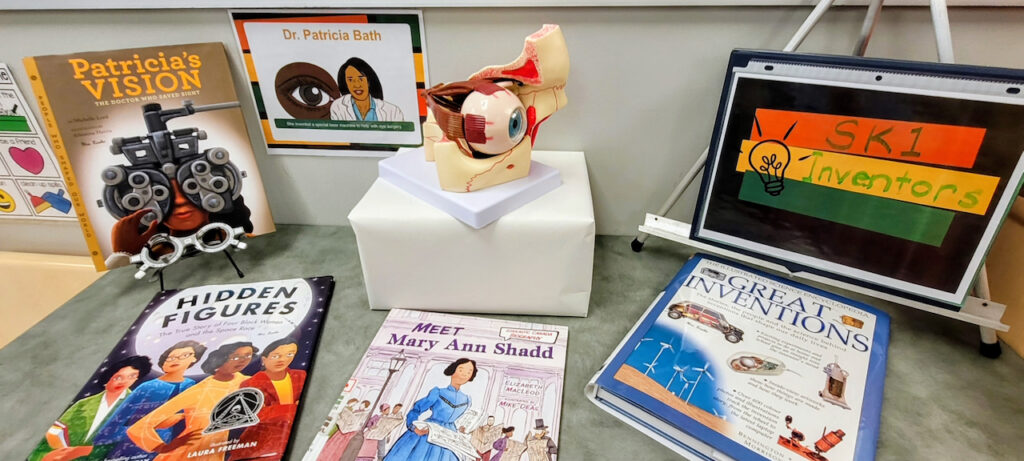
We then blasted off into an inspiring adventure with Hidden Figures: The True Story of Four Black Women and the Space Race by Margot Lee Shetterly. Through this story, students discovered the extraordinary lives of Dorothy Vaughan, Mary Jackson, Katherine Johnson, and Christine Darden — brilliant African American women who worked as “human computers” at NACA (now known as NASA).
Students were fascinated to learn that before electronic computers existed, these women solved complex mathematical problems by hand to help send astronauts safely into space — all while overcoming racial and gender barriers. Their perseverance sparked meaningful conversations about resilience, fairness, and believing in your own abilities.
Unplugged Coding: Mission to the Moon
To extend our learning, students worked collaboratively using pre-designed coding boards to safely guide astronauts to the moon. While the boards were provided, students actively moved starting points, obstacles, and end points to create new challenges.
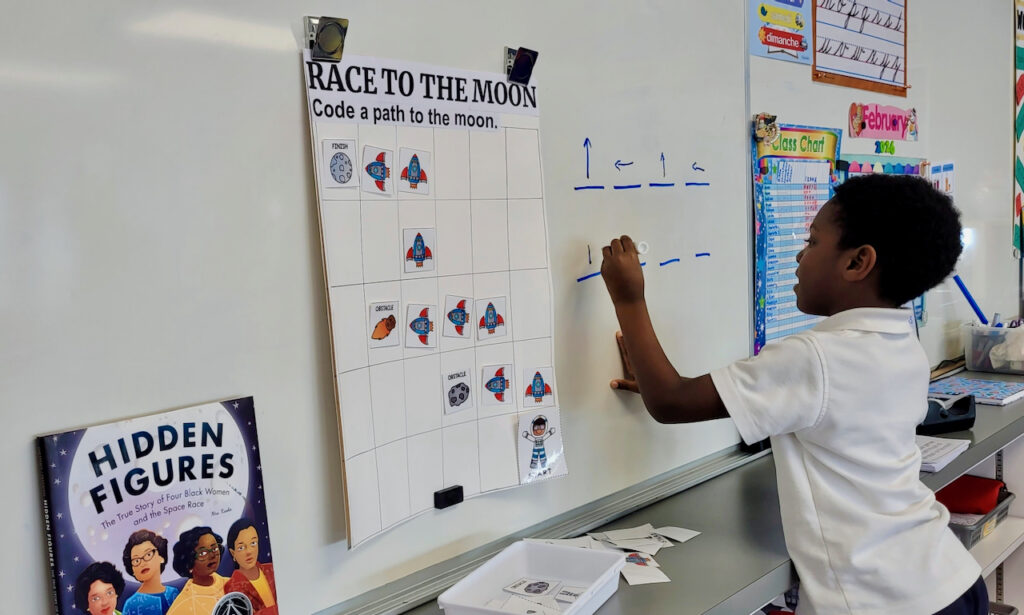
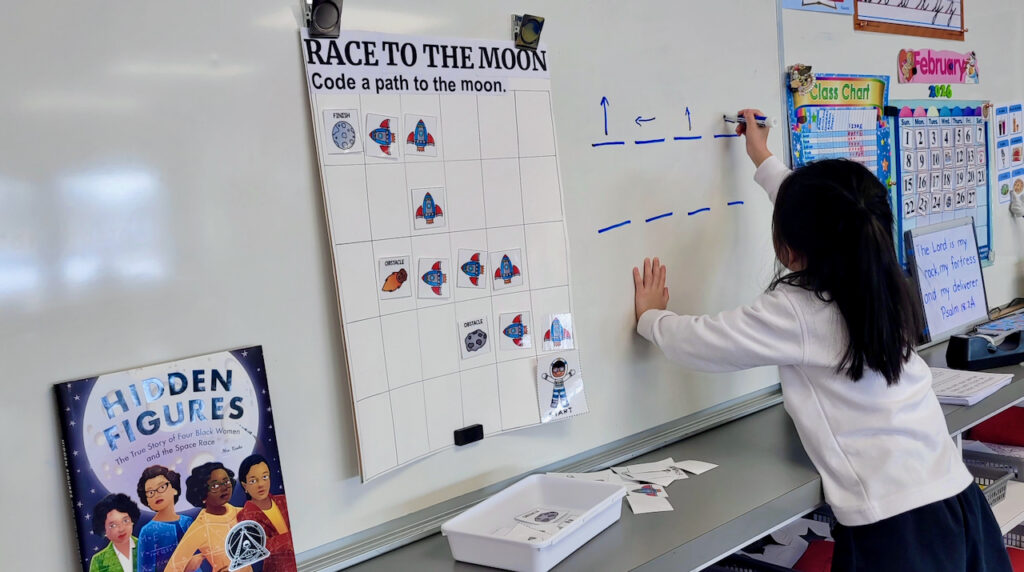
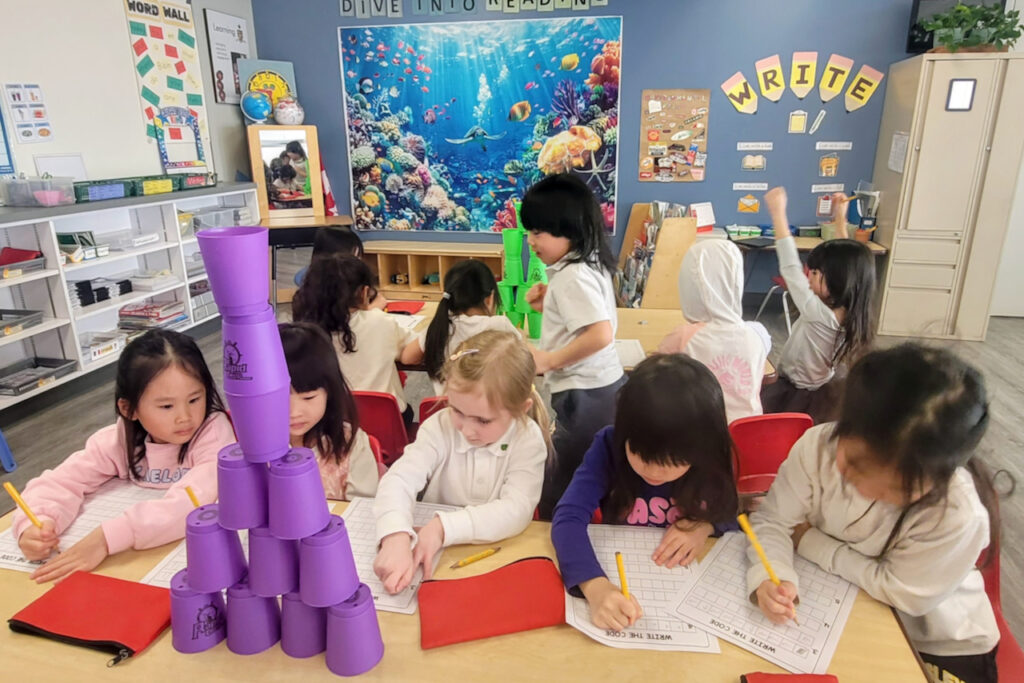
The real thinking began when they had to write the code.
What seemed like a simple path quickly became a deeper problem-solving task. Students had to think carefully about sequencing, direction, and clarity. Some code worked on the first try. Other required debugging, revising, and trying again. Through this process, students learned that mistakes are not failures — they are part of learning.
After completing their missions, students reflected on what strategies worked, what didn’t, and how they adjusted their thinking. They began noticing that even when using the same board, solutions could look very different.
Be the Robot! Clear Coding in Action
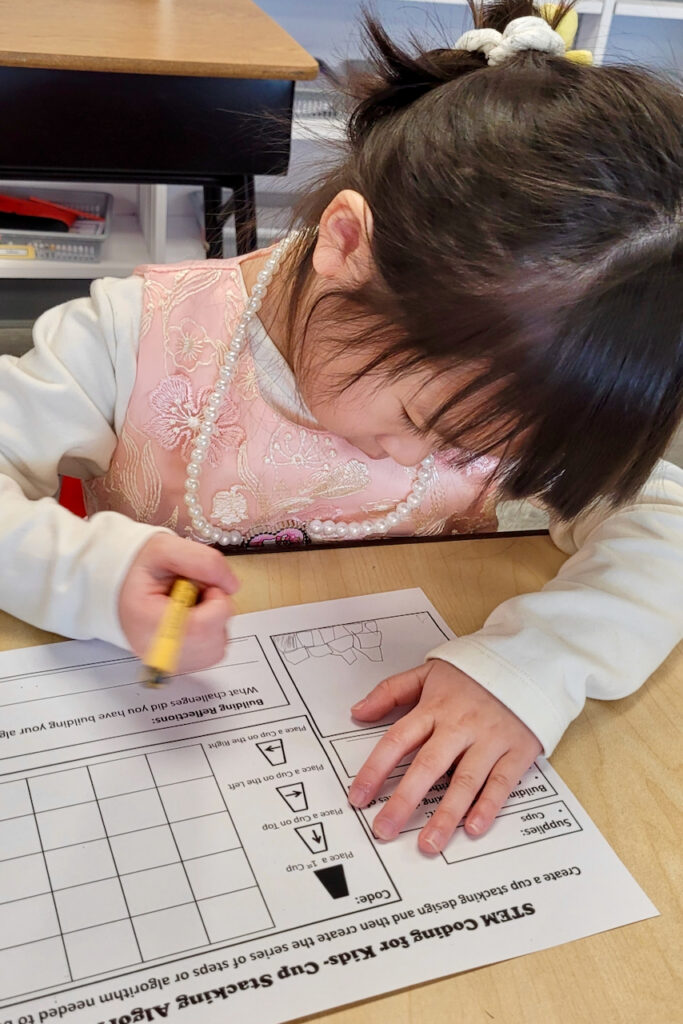
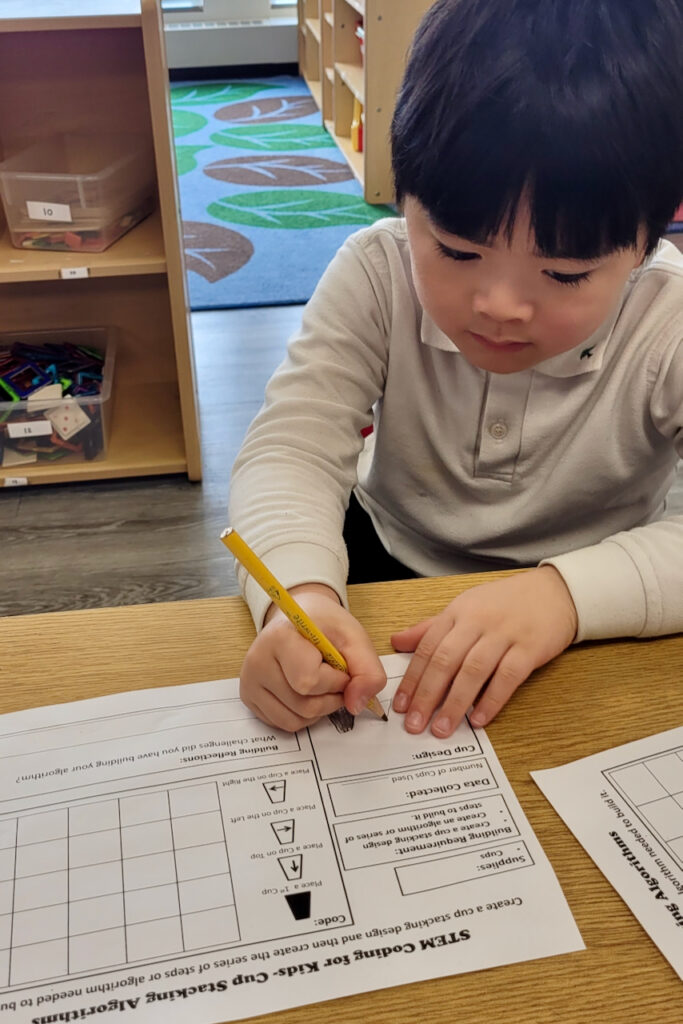
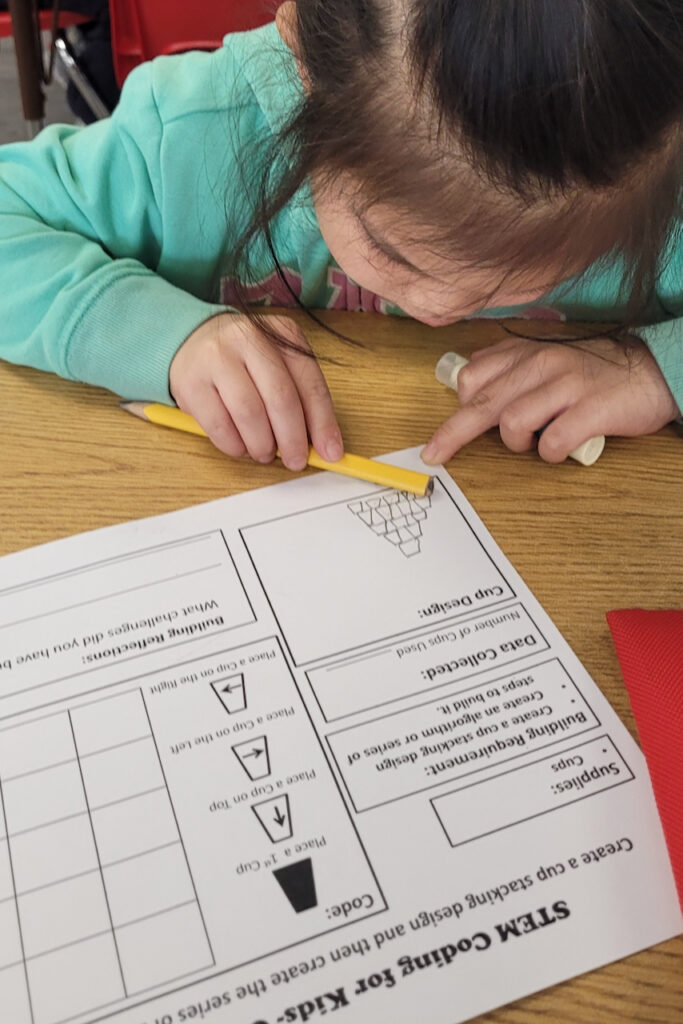
For our next activity, students individually created their own cup stacking design and then selected a “robot” teammate to follow their exact instructions to build it. The catch? The robot could only do what was written — nothing more, nothing less!
This activity made one thing very clear: coding requires precise communication. If one step was missing or unclear, the structure didn’t turn out as planned. Students quickly realized the importance of being specific, organized, and thoughtful in their instructions.
Trials, Errors… and Success!
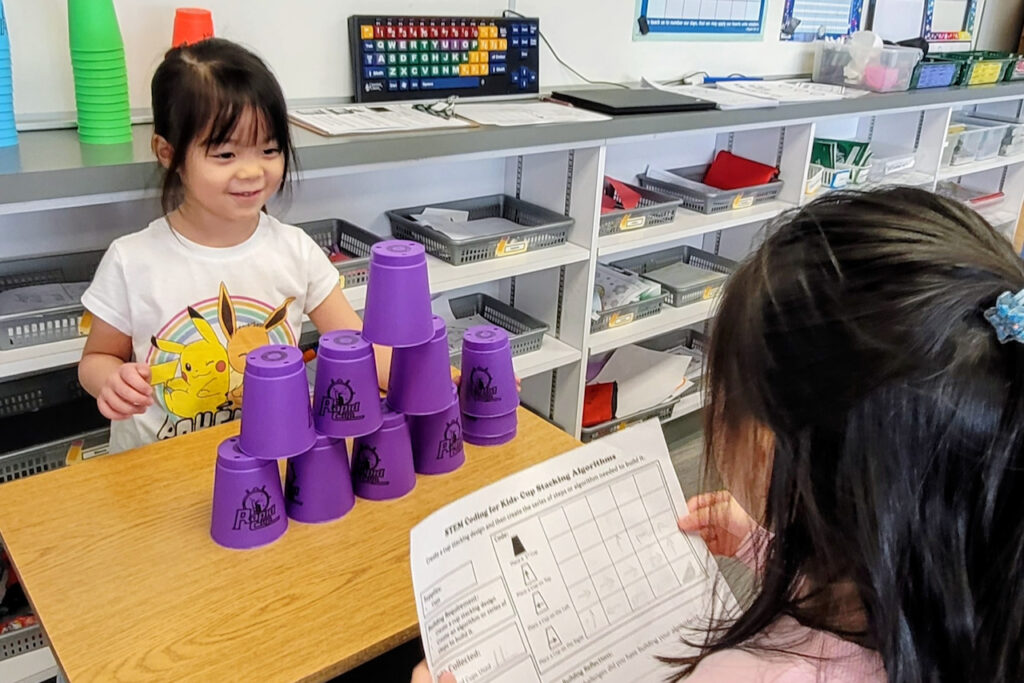
To wrap up our learning, students worked in groups to stack cups and code their designs together. There were lots of trials and errors — towers tipped, steps were missed, and code was revised. But through collaboration, problem-solving, and perseverance, they succeeded.
The pride on their faces said it all.
Throughout the month, students weren’t just learning about history — they were building essential skills:
- Critical thinking
- Collaboration
- Communication
- Perseverance
- Problem-solving
Black History Month became more than a celebration of remarkable figures from the past. It became a hands-on learning experience where students saw how determination, teamwork, and clear thinking can help them overcome challenges — just like the innovators they studied.
Our future mathematicians, engineers, and coders are already hard at work.